
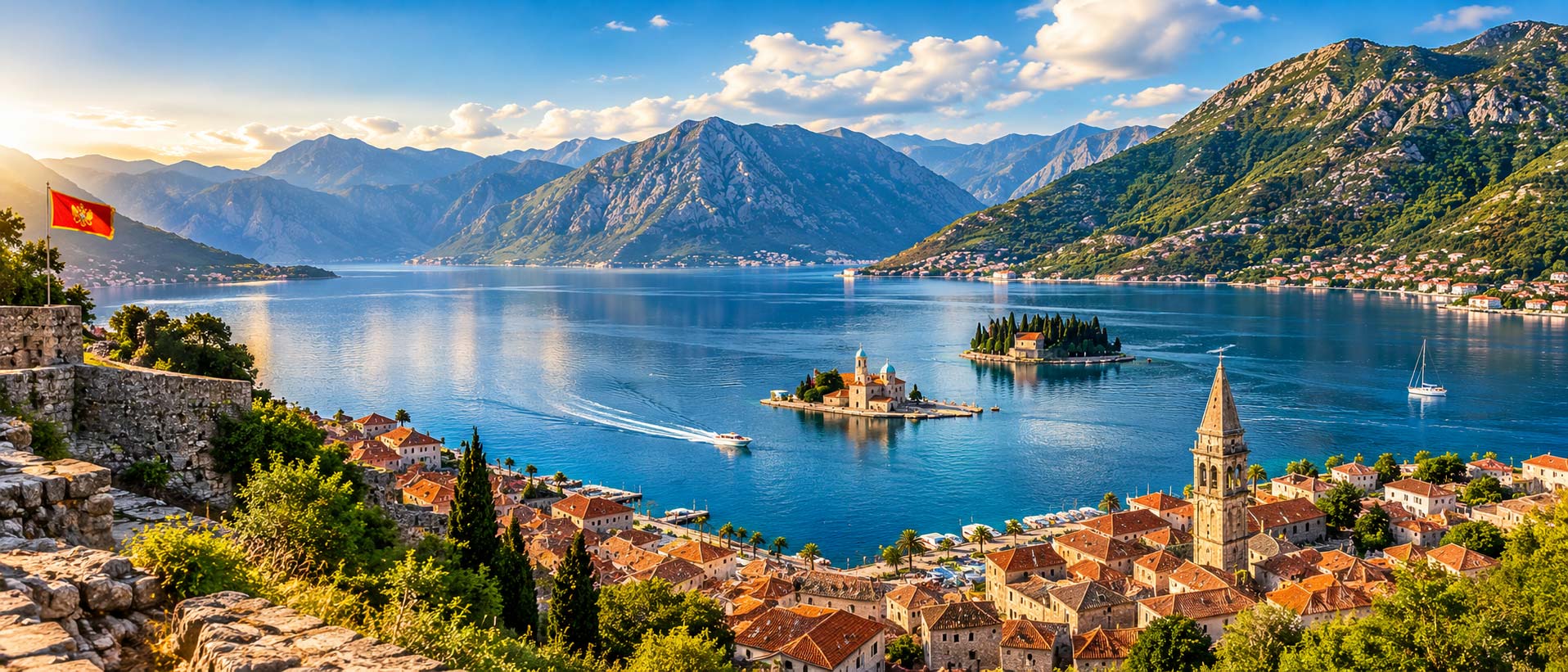

Discover the spectacular Bay of Kotor, from medieval coastal towns and historic island churches to hidden sea caves, scenic speedboat tours and the breathtaking mountains of Lovćen.
Imagine a place where dramatic mountains plunge towards deep blue waters, medieval towns line the waterfront, and small stone churches stand on islands surrounded by the Adriatic Sea. Welcome to Boka Bay, one of Montenegro’s most remarkable destinations and a place where natural beauty, history and Mediterranean culture come together.
Known locally as Boka Kotorska or the Bay of Kotor, this extraordinary region offers far more than beautiful scenery. Visitors can wander through centuries-old streets, discover Venetian palaces, explore secluded coves by speedboat, swim in crystal-clear waters and travel into the mountains for panoramic views of the coastline.
Whether you are visiting Montenegro for a weekend, planning a summer holiday or looking for an unforgettable day trip, Boka Bay offers experiences for every type of traveller.
In this guide, you will discover the most beautiful places in the bay, the best activities to enjoy, the historic landmarks worth visiting and practical tips to help you plan your journey.
Where Is Boka Bay?
Boka Bay is located on the Adriatic coast of southwestern Montenegro, close to the Croatian border and within easy reach of Tivat Airport. It is one of the country’s most recognisable natural landmarks, famous for its sheltered waters, steep limestone mountains and picturesque coastal settlements.
The bay consists of several connected basins surrounded by the mountains of the Dinaric Alps. Although it is often described as Europe’s southernmost fjord because of its dramatic scenery, its geological formation is technically a submerged river valley, known as a ria.
The landscape changes as you travel through the bay. Near the entrance, the coastline opens towards the Adriatic, while further inland, the mountains rise above narrow passages, quiet villages and sheltered waterfronts.
The region includes several historic towns and communities, each with its own character:
- Kotor – A medieval walled town famous for its architecture, history and mountain-backed setting.
- Perast – An elegant Baroque settlement with waterfront palaces and two iconic islands.
- Tivat – A lively coastal town combining maritime heritage with modern marina life.
- Herceg Novi – A historic town known for its fortresses, stone stairways and seaside promenade.
- Risan – An ancient settlement with important Roman archaeological remains.
- Dobrota, Prčanj and Stoliv – Traditional waterfront communities with historic stone houses, churches and quiet coastal views.
Together, these places create a destination that can be explored over several days or experienced through a combination of boat excursions, scenic drives and walking tours.
A Brief History of Boka Bay
Boka Bay has been an important maritime crossroads for thousands of years. Its naturally sheltered waters offered protection to ships, while its position along the Adriatic connected the eastern Mediterranean with the Balkans and central Europe.
The region’s history includes Illyrian settlements, Roman influence, Byzantine connections, medieval Slavic states, Venetian rule and the Austro-Hungarian period. Each era contributed to the area’s architecture, traditions and cultural identity.
During the Middle Ages, Kotor developed into an important commercial and artistic centre. Its merchants, sailors and craftspeople helped establish a distinctive urban culture, while neighbouring Perast became famous for its ship captains and maritime traditions.
Venetian influence is particularly visible in the stone palaces, defensive walls, churches and squares found throughout the region. Later military installations and naval facilities added another layer to Boka Bay’s strategic importance.
In 1979, the Natural and Culturo-Historical Region of Kotor was inscribed on the UNESCO World Heritage List. Its significance lies not only in individual monuments but also in the relationship between historic towns, traditional settlements, cultivated hillsides and the surrounding landscape.
Today, Boka Bay remains a living cultural region, where historic architecture and local traditions coexist with contemporary tourism and maritime activities.
The Most Beautiful Places to Visit in Boka Bay
1. Kotor Old Town
Kotor is the natural starting point for exploring Boka Bay. Surrounded by impressive defensive walls and backed by steep mountains, its historic centre is one of the most atmospheric places on the Montenegrin coast.
Enter through the Sea Gate and discover a maze of narrow stone streets, small squares, historic churches and traditional cafés. The town is compact enough to explore on foot, yet every corner reveals another architectural detail or glimpse of its maritime past.
One of the most important landmarks is St. Tryphon’s Cathedral, consecrated in 1166. Its Romanesque architecture and rich history make it a highlight of the Old Town.
Other attractions include the Maritime Museum of Montenegro, historic aristocratic palaces, the Clock Tower and the old city fortifications.
For spectacular views, climb towards the Fortress of St. John above the town. The route follows historic defensive walls up the mountainside, rewarding visitors with panoramic views over the terracotta rooftops, the waterfront and the surrounding bay.
Allow at least half a day to explore Kotor properly, especially if you want to visit the museums or climb the fortress.
Best for: History, architecture, photography, local cuisine and panoramic viewpoints.
2. Perast
Perast is one of the most picturesque settlements in Boka Bay. Its waterfront is lined with elegant stone buildings, historic churches and former captains’ palaces that reflect the town’s prosperous maritime past.
During the Venetian period, Perast became an important centre of seafaring. Wealthy families invested their fortunes in impressive residences, many of which remain part of the town’s distinctive character.
Unlike Kotor, Perast is small and peaceful, making it ideal for a leisurely stroll along the waterfront. Visitors can admire the architecture, stop at a seaside restaurant or enjoy views across the water towards the surrounding mountains.
The town’s most famous attractions are the islands of Our Lady of the Rocks and St. George, situated just offshore.
Perast is particularly beautiful in the early morning and late afternoon, when the light softens and the waterfront becomes quieter.
Best for: Romantic walks, historic architecture, photography, boat trips and waterfront dining.
3. Our Lady of the Rocks
One of the most recognisable sights in Montenegro is Our Lady of the Rocks, a small artificial island opposite Perast.
According to local tradition, sailors discovered an icon of the Virgin Mary on a reef in 1452. Over the centuries, the people of Perast gradually created an island by depositing stones and sinking old ships around the reef.
A church dedicated to Our Lady was built on the island, and the site became an important focus of local religious and maritime traditions.
Inside, visitors can admire religious artworks, historic objects and a collection of votive offerings connected with sailors and their families. The church is especially known for its Baroque artistic heritage.
The island is accessible by small boat from Perast and is commonly included in sightseeing excursions across the bay.
Its distinctive silhouette, with the church rising above the water, makes it one of the most photographed locations in Boka Bay.
Travel tip: If you are planning a boat excursion, consider including Perast and Our Lady of the Rocks in the same trip.
4. Tivat and Porto Montenegro
Tivat offers a different side of Boka Bay, combining coastal life and maritime history with modern tourism.
The town has long-standing connections with naval activity and shipbuilding. Today, its waterfront is also known for Porto Montenegro, a modern marina development built on the site of a former naval shipyard.
Visitors can enjoy a walk along the promenade, explore cafés and restaurants, admire the yachts or use Tivat as a starting point for boat excursions.
Tivat is also a convenient base for travellers arriving by air, as Tivat Airport provides access to the surrounding coastal towns.
For those who enjoy combining traditional destinations with contemporary waterfront attractions, Tivat offers a worthwhile stop during a tour of Boka Bay.
Best for: Marina views, restaurants, waterfront walks, sailing and convenient access to excursions.
5. Herceg Novi
Located near the entrance to Boka Bay, Herceg Novi is known for its historic fortifications, Mediterranean atmosphere and long seaside promenade.
The town’s history reflects centuries of competition between regional powers, including Ottoman, Spanish, Venetian and Austro-Hungarian influence.
Its most interesting landmarks include Forte Mare, Kanli Kula and Španjola Fortress. These defensive structures reveal the strategic importance of the town and provide impressive views over the surrounding coastline.
Herceg Novi’s Old Town is characterised by stone stairways, small squares, churches and traditional buildings. The Pet Danica promenade follows the coast and offers a pleasant route for walking beside the sea.
Because of its position near the entrance to the bay, Herceg Novi is also a useful starting point for exploring the Luštica Peninsula, Mamula Island and the Blue Cave.
Best for: History, fortresses, coastal walks, swimming and boat excursions.
6. Risan and the Roman Mosaics
For visitors interested in ancient history, Risan offers a fascinating contrast to the medieval towns of Boka Bay.
The settlement has roots reaching back to the ancient Illyrian period and later became part of the Roman world. Archaeological discoveries provide evidence of the area’s importance as a settlement connected to Mediterranean trade and cultural exchange.
Risan’s best-known attraction is its Roman mosaic collection, which includes a remarkable depiction of Hypnos, the ancient Greek god of sleep.
These mosaics offer a glimpse into Roman domestic life, artistic traditions and the cultural influences that reached the Adriatic coast nearly two thousand years ago.
Risan is a rewarding stop for travellers who want to explore more than the region’s famous waterfront scenery.
Best for: Archaeology, ancient history and quieter cultural excursions.
7. Dobrota, Prčanj and Stoliv
Some of the most charming parts of Boka Bay are not major tourist towns but historic coastal communities that developed along the water.
Dobrota, just north of Kotor, is known for its old stone houses, chapels and waterfront residences associated with maritime families.
Prčanj features historic churches and elegant buildings that reflect the wealth generated by seafaring and trade. Its waterfront offers a quieter atmosphere than the main tourist centres.
Further along the bay, Stoliv provides a glimpse of traditional coastal life, with stone architecture, greenery and views across the water.
These communities are ideal for visitors who enjoy slower travel, scenic walks and discovering places beyond the most famous attractions.
Discover Boka Bay by Speedboat
While exploring the towns on foot reveals their architecture and cultural heritage, a speedboat excursion offers an entirely different perspective.
From the water, you can appreciate the scale of the surrounding mountains, see how the settlements developed along the coastline and reach locations that are difficult or impossible to explore in the same way by road.
Speedboat tours are among the most memorable ways to experience Boka Bay, especially for visitors who want to combine sightseeing, swimming and adventure in a single excursion.
Depending on the departure point, weather conditions and chosen route, a boat tour may include several of the following highlights.
The Blue Cave
The Blue Cave, located along the Luštica Peninsula, is famous for the intense blue and turquoise colours created when sunlight enters the sea cave and reflects through the clear water.
Visitors often come here to admire the unusual light, swim when conditions permit and experience one of the most distinctive natural attractions on the Montenegrin coast.
The cave is most commonly visited by boat. Sea conditions and access arrangements can affect whether swimming or entering the cave is possible on a particular day.
Mamula Island
Mamula Island lies near the entrance to Boka Bay and is dominated by a circular stone fortress constructed in the nineteenth century during the Austro-Hungarian period.
The fortress formed part of the region’s coastal defence system. During the Second World War, the island was also used as a prison by Italian occupying forces.
Today, the island is an important historical landmark and a striking sight from the sea. Access ashore depends on current arrangements, so visitors should check before planning a landing.
The Submarine Tunnels of Luštica
Hidden along the rocky coastline of the Luštica Peninsula are submarine tunnels constructed during the Yugoslav period.
These installations were designed to shelter naval vessels and illustrate the strategic military role of Boka Bay in more recent history.
From a speedboat, visitors can see the tunnel entrances cut into the coastline and learn about the region’s naval past.
The tunnels are best viewed with a suitable boat operator, and visitors should respect any restrictions on access.
Perast and the Bay’s Historic Waterfront
A boat trip through the inner bay provides excellent views of Perast, its waterfront palaces and the islands of Our Lady of the Rocks and St. George.
Seeing these landmarks from the water helps explain why maritime trade played such an important role in the development of Boka Bay.
Depending on the excursion, visitors may have time to stop in Perast, visit the island church or simply enjoy the scenery from the boat.
Why Choose a Speedboat Tour?
A speedboat excursion is particularly useful for travellers with limited time. Rather than travelling between every attraction by road, visitors can explore several coastal highlights in a single outing.
It also provides access to secluded coves, unusual coastal formations and viewpoints that are best appreciated from the sea.
When choosing a tour, consider the departure location, duration, destinations included, opportunities for swimming, group size and weather conditions.
For the best experience, select an excursion that matches your interests rather than trying to visit every attraction in one day.
Lovćen: A Mountain Adventure Above Boka Bay
Boka Bay is not only about the sea. Rising above the coastal region, Mount Lovćen offers a dramatic change of scenery and a deeper connection with Montenegro’s cultural identity.
Lovćen National Park is known for its rugged landscapes, mountain roads and sweeping views. The region is especially significant because of its association with Petar II Petrović-Njegoš, the nineteenth-century ruler, poet and philosopher who remains one of Montenegro’s most important historical figures.
The principal landmark is the Njegoš Mausoleum on Jezerski Vrh. Reaching it involves a mountain drive followed by a climb up a long flight of steps, but the panoramic views make the journey worthwhile.
On clear days, the surrounding peaks, inland landscapes and distant Adriatic coastline create an unforgettable panorama.
The road from Kotor towards Lovćen is itself part of the experience, with winding mountain bends and increasingly expansive views over the bay.
What Makes a Lovćen Excursion Special?
A trip to Lovćen offers a completely different experience from a boat tour.
While the bay provides calm waters, historic settlements and Mediterranean scenery, the mountains offer cooler air, dramatic landscapes and a chance to discover the country’s inland heritage.
Depending on the itinerary, an excursion may include scenic viewpoints, Lovćen National Park, the Njegoš Mausoleum and a stop in the historic town of Cetinje.
Planning tip: Lovćen is reached by road, not by speedboat. It is best organised as a separate mountain excursion or as part of a combined land itinerary.
For visitors spending several days in Montenegro, combining a speedboat tour with a trip to Lovćen is an excellent way to experience two very different sides of the country.
The Best Beaches and Swimming Spots in Boka Bay
Although the region is famous for its historic towns, Boka Bay also offers plenty of opportunities to enjoy the sea.
Many swimming spots are small pebble beaches, concrete bathing platforms or rocky areas with direct access to the water. Large sandy beaches are less common around the inner bay.
Some coastal towns have convenient swimming areas close to cafés and restaurants, while other locations are quieter and more secluded.
Boat excursions can also provide opportunities to swim in sheltered coves when weather and sea conditions allow.
When choosing a swimming spot, consider water access, available facilities, shade and the distance from your accommodation.
If you are travelling during the summer, arriving early can help you find a quieter place to relax. Always follow local safety advice and avoid swimming near moving boats or in areas where access is restricted.
Taste the Local Cuisine of Boka Bay
Food is an important part of the Boka Bay experience. The region’s cuisine reflects its coastal setting, Mediterranean influences and long-standing maritime traditions.
Fresh fish, seafood, olive oil, seasonal vegetables and locally prepared dishes feature prominently on menus throughout the bay.
Some of the specialities worth looking for include:
- Buzara-style seafood – Mussels, prawns or other seafood prepared with garlic, wine, herbs and other local ingredients.
- Fresh Adriatic fish – Often grilled and served with vegetables or potatoes.
- Black risotto – A seafood rice dish prepared with cuttlefish or squid ink.
- Local cheeses and cured meats – Popular choices for a traditional Montenegrin appetiser.
- Mediterranean desserts – Sweet treats influenced by the region’s Venetian and wider Adriatic culinary heritage.
Waterfront restaurants in Kotor, Perast and other coastal settlements offer the opportunity to enjoy local dishes while taking in views of the bay.
For a more relaxed experience, consider stopping for lunch during a sightseeing day rather than rushing between attractions.
When Is the Best Time to Visit Boka Bay?
Boka Bay is attractive throughout much of the year, but the best time to visit depends on the type of experience you want.
Spring: March to May
Spring brings milder weather, greener landscapes and generally fewer visitors than the peak summer months.
It is a good period for exploring historic towns, walking along the waterfront and enjoying scenic drives. Boat excursions operate according to seasonal schedules and sea conditions.
Summer: June to August
Summer is the busiest period, with warm weather, long days and ideal opportunities for swimming and coastal activities.
This is a popular time for speedboat tours, island visits and outdoor dining. However, historic centres can become crowded, and advance planning is helpful during peak travel dates.
Autumn: September to November
Early autumn is particularly appealing for travellers who prefer a more relaxed atmosphere.
Sea temperatures can remain pleasant after summer, while the towns are often quieter than during July and August. September and early October can be excellent months for combining boat trips with sightseeing, although conditions vary.
Winter: December to February
Winter brings a quieter atmosphere and a different perspective on the region.
It is a suitable time for cultural visits, local restaurants and exploring historic towns without the summer crowds. Some tourist services and boat excursions may operate on reduced schedules, and weather conditions can be less predictable.
For a combination of comfortable sightseeing and sea activities, late spring and early autumn are often attractive options. Always check the forecast and confirm excursion availability before travelling.
How Many Days Do You Need in Boka Bay?
The ideal length of stay depends on how much of the region you want to explore.
One Day
If you only have one day, focus on Kotor Old Town and one additional experience.
You could explore Kotor in the morning, visit Perast and Our Lady of the Rocks in the afternoon, or choose a speedboat excursion that covers several highlights of the bay.
Trying to visit every town and attraction in a single day is likely to feel rushed.
Two to Three Days
A two- or three-day visit offers a much better balance.
A possible itinerary is:
Day 1: Explore Kotor Old Town, visit St. Tryphon’s Cathedral and walk towards the Fortress of St. John.
Day 2: Take a speedboat tour to explore selected attractions such as the Blue Cave, Mamula Island, the submarine tunnels and scenic coastal locations.
Day 3: Visit Perast and Our Lady of the Rocks, explore another historic town or take a mountain excursion towards Lovćen.
Adjust the itinerary to your departure point, weather conditions and preferred pace.
Four Days or More
With four or more days, you can explore the bay more thoroughly.
Visit Kotor, Perast, Tivat, Herceg Novi and Risan, discover quieter waterfront communities, spend time swimming and enjoy a separate excursion to Lovćen.
A longer stay also allows you to experience the region at a more relaxed pace, with time for local food, photography and spontaneous stops along the coast.
Practical Travel Tips for Visiting Boka Bay
A little planning can make your visit more enjoyable.
Getting there: Tivat Airport is conveniently located for many parts of the bay. Podgorica Airport is another option, depending on your travel plans. Dubrovnik Airport may also be relevant for some international itineraries, but crossing the border requires additional travel planning.
Getting around: You can explore the historic centres on foot, travel between towns by road or join a boat excursion. A car offers flexibility, although traffic and parking can be challenging in busy summer periods.
Boat excursions: Check the departure point, destinations, duration, group size and cancellation policy before booking. Sea conditions can affect routes and access to certain locations.
What to bring: Comfortable walking shoes, sun protection, water and a light layer for changing weather are useful. For swimming excursions, bring swimwear and a towel if permitted by the tour operator.
Clothing: Historic churches and religious sites may have dress requirements, so modest clothing is a sensible choice when visiting them.
Cash and payments: Card payments are common in many tourist establishments, but it is useful to carry some cash for smaller purchases or services.
Respecting heritage: Boka Bay’s historic towns and natural sites are valuable cultural and environmental assets. Follow local rules, avoid damaging historic structures and leave natural areas as you found them.
Frequently Asked Questions About Boka Bay
Is Boka Bay worth visiting?
Absolutely. Boka Bay combines spectacular scenery, historic towns, cultural landmarks, swimming spots and boat excursions in one destination. It is suitable for couples, families, solo travellers and anyone interested in Mediterranean history and nature.
What is the difference between Boka Bay and Kotor?
Boka Bay is the wider coastal region, while Kotor is one of its historic towns. Visiting Kotor is an excellent starting point, but the bay also includes places such as Perast, Tivat, Herceg Novi and Risan.
Can you explore Boka Bay by boat?
Yes. Boat excursions are a popular way to discover the coastline, visit islands and reach attractions such as the Blue Cave and the submarine tunnels of Luštica. Routes and stops depend on the departure point, weather and tour selected.
Can you visit the Blue Cave from Kotor?
The Blue Cave is commonly included in speedboat excursions departing from locations around Boka Bay, including Kotor and nearby coastal towns. Travel time and route availability vary, so confirm the itinerary with the operator.
Is Lovćen close to Kotor?
Lovćen lies inland above the bay and is accessible by road. It is a popular mountain excursion from the Kotor area, especially for visitors interested in panoramic views, the national park and the Njegoš Mausoleum.
Is Boka Bay suitable for families?
Yes. Families can enjoy historic towns, waterfront walks, boat trips and swimming opportunities. Choose excursions appropriate for children’s ages, check safety arrangements and consider the length of the boat journey before booking.
What is the most beautiful place in Boka Bay?
There is no single answer. Kotor stands out for its medieval architecture, Perast for its waterfront charm and islands, the Blue Cave for its striking natural colours, and Lovćen for its mountain scenery. The best choice depends on whether you prefer history, nature or adventure.
Discover Boka Bay Your Way
Boka Bay is a destination that rewards exploration. Its medieval towns tell stories of merchants and sailors, its islands preserve centuries of religious and maritime traditions, and its mountains offer spectacular views over one of the Adriatic’s most distinctive landscapes.
Spend a morning wandering through Kotor’s historic streets, discover Perast and its island churches, cruise along the coastline by speedboat or travel into the mountains towards Lovćen. Every part of the region offers a different perspective on Montenegro’s natural beauty and cultural heritage.
Whether you are planning a short visit or a longer holiday, the best experience often comes from combining several activities rather than staying in one place.
Explore the historic waterfronts, discover hidden coastal landmarks, enjoy local cuisine and experience the bay from both the sea and the mountains.
Boka Bay is more than a beautiful view. It is a destination to explore, experience and remember.
Start planning your journey and discover the best of Boka Bay with kotor.cloud.
0 Comment